
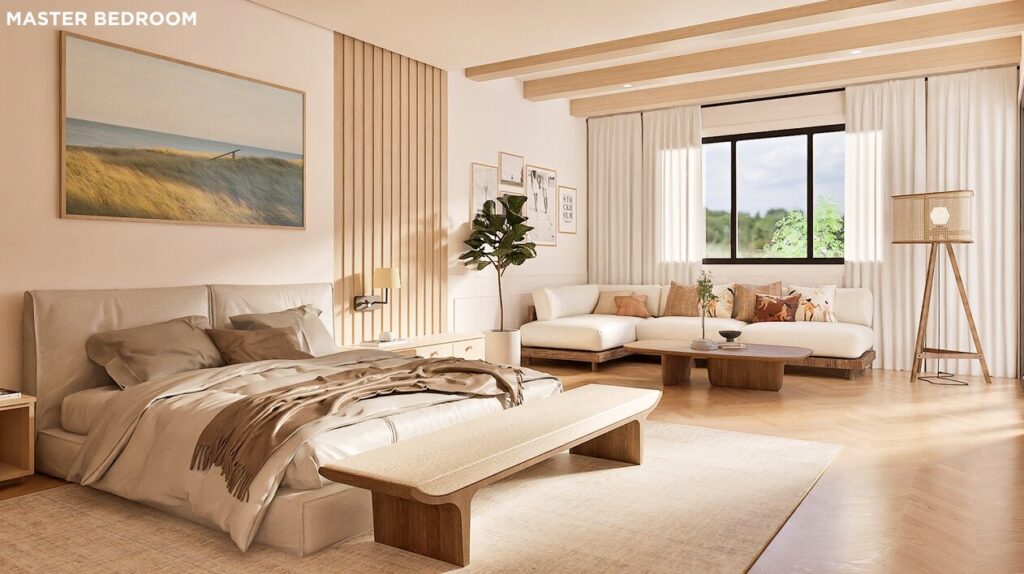

Most landed home renovation regrets aren’t about finishes.
They are about layout decisions made too early, without the right questions asked — decisions that become permanent the moment concrete is poured. Effective space planning for landed homes starts well before the design brief. Here is how to get those decisions right.
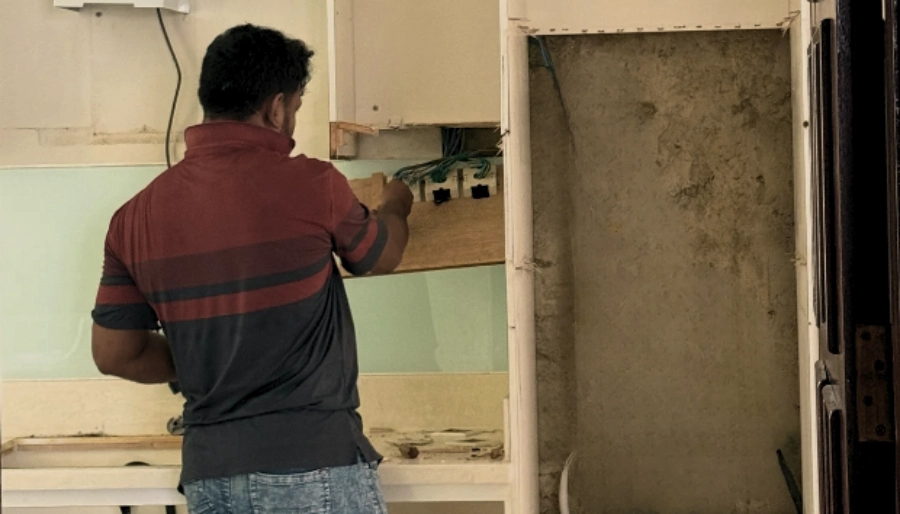
01 — Understand What Your Structure and Planning Rules Permit
In a landed house, space planning begins with constraints — not creativity. The costliest mistakes don’t happen during construction; they happen in the brief stage, when layout decisions are made before anyone has established what the structure and regulations will actually allow.
Before any wall moves or spatial reimagining, you need clarity on four things:
- Which walls are load-bearing — these define what can genuinely be reimagined versus what must be worked around
- Where your plumbing stacks and M&E risers sit — wet zone placement is often dictated by these, not design preference
- What your URA Development Baseline permits — GFA limits, envelope controls, and Conservation Area guidelines if applicable
- What Permissible Development allows for any proposed additions — rear extensions, attic conversions, new voids
Callout
At CLO Haus, our in-house architects review all structural drawings and planning parameters at the very start of every engagement — so the brief we build together is grounded in what is actually buildable. We begin not with mood boards, but with what your home can become.
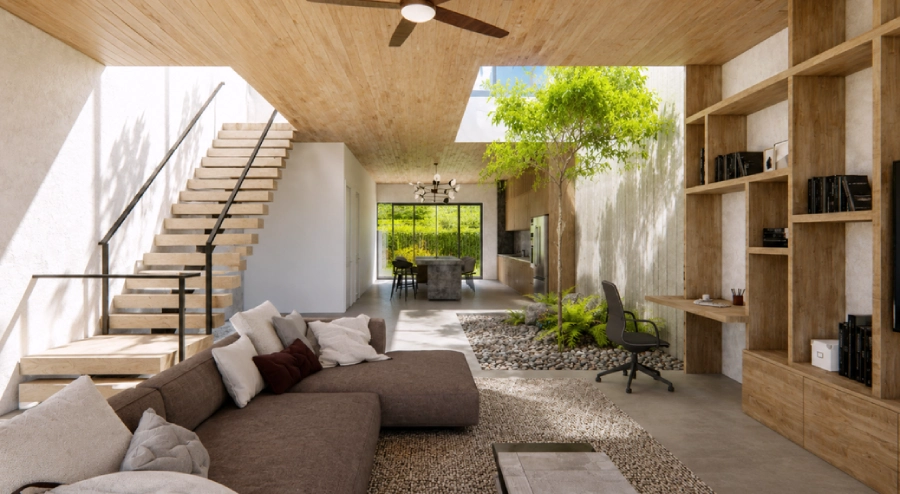
02 — Let Light and Air Inform Your Layout — Not Just Aesthetics
In Singapore’s climate, solar orientation and natural ventilation are not decorative considerations. They are structural ones — and in any landed house renovation, they should shape the layout before furniture or finishes enter the conversation.
- Place living and dining areas away from direct west-facing sun to reduce thermal gain through the afternoon
- Kitchens and utility zones work well on the east side — morning light is functional here; afternoon heat is not
- Position master bedrooms away from street-facing facades for acoustic separation and composure
- Explore light wells, internal voids, and skylights early — for terrace houses especially, these are the single most effective way to resolve deep, dark floor plates
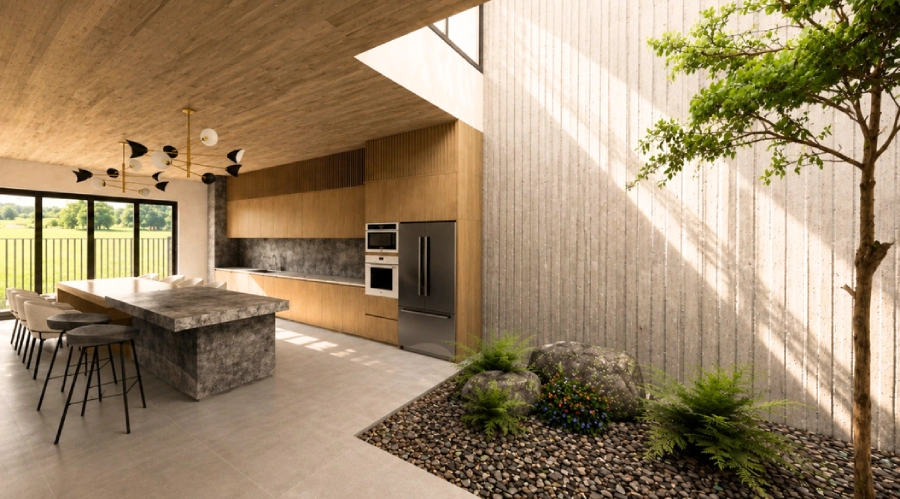
03 – Plan in Zones – Not Just Rooms
The most enduring approach to space planning in a landed home is to think in zones — grouping spaces by how they are used, who uses them, and how much acoustic separation they require. This produces layouts that serve real life rather than a curated version of it.
Zone A – Social & Arrival
Foyer, living, dining, and kitchen as one continuous, considered sequence. Open-concept layouts work best when this zone is designed as a whole — not assembled room by room.
Zone B – Private & Rest
Bedrooms separated from daytime activity — acoustically and physically. Seamless transitions between private and shared spaces matter as much as the rooms themselves.
Zone C – Service & Utility
Helpers’ quarters, laundry, and storage consolidated with a distinct service entry — functional and dignified, out of primary sightlines.
Zone D – Threshold & Outdoor
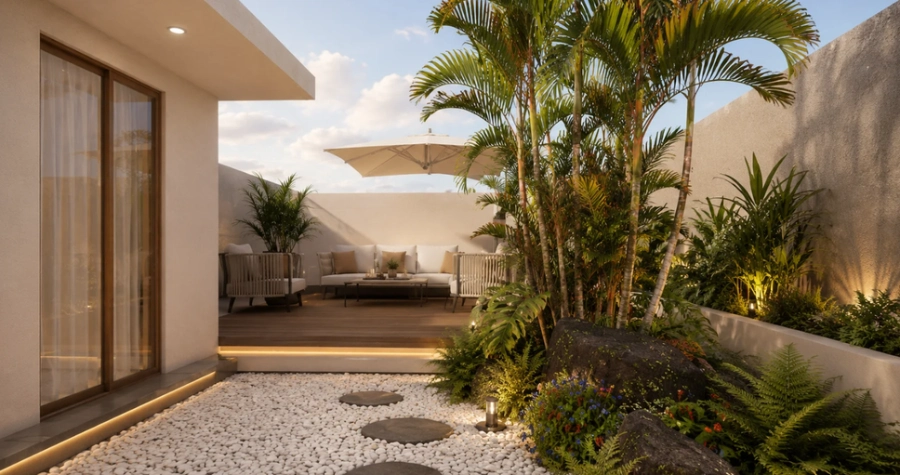
Car porch, rear terrace, and garden zones that blur the boundary between inside and outside — extending the living experience beyond the built envelope.
Callout
A change in ceiling height, a material transition, or a considered screen can define zone boundaries more elegantly than a door ever will.
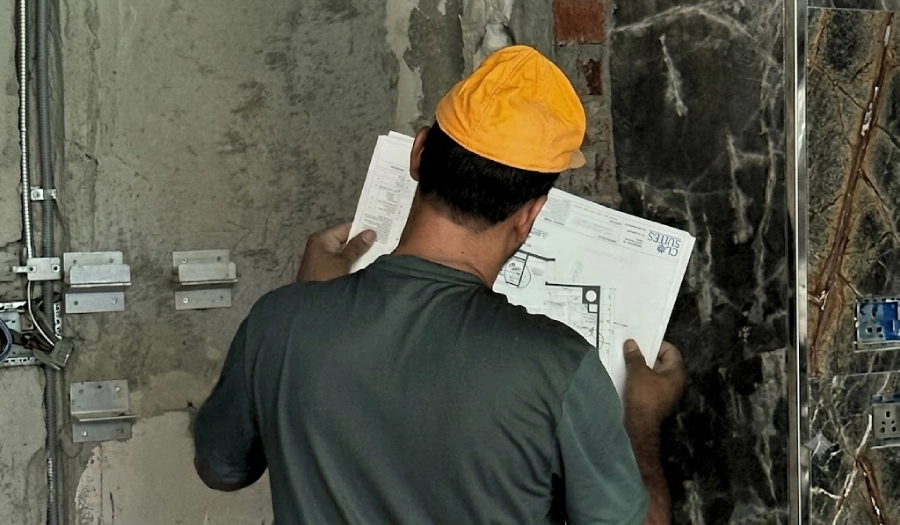
Dark Insight Panel — One thing most homeowners underestimate
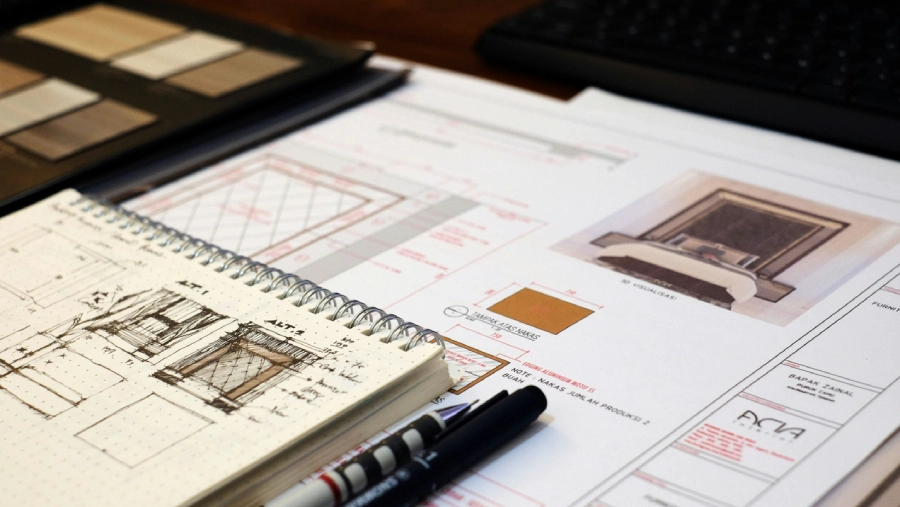
One thing most homeowners underestimate: Built-in joinery — wardrobes, kitchen cabinetry, and study units — should be designed at the same time as the layout, not after. They define spatial proportion as much as any wall does. Get them into the brief early.
FAQ
Do I need an architect for a landed home renovation, or is an interior designer sufficient?
For any work involving structural changes, additions, or submissions to the Building and Construction Authority (BCA) or URA, a registered architect is required. An interior designer alone cannot certify structural drawings or handle planning approvals. This is one reason CLO Haus maintains an in-house architecture team — so design decisions are always structurally and legally grounded from the start.
What are the most common space planning mistakes in Singapore landed home renovations?
The most frequent issues are:
- positioning wet zones without considering existing riser locations (which forces costly re-routing)
- committing to an open-concept layout without accounting for acoustic separation between zones
- designing built-ins after the layout is finalised — which often results in awkward proportions
All three are avoidable when space planning precedes the design brief.
Can I extend or add a floor to my landed home in Singapore?
Additions & Alterations (A&A) — including rear extensions, attic conversions, and additional storeys — are subject to URA’s Permissible Development guidelines and your property’s Development Baseline.
Whether an extension is possible depends on your remaining GFA, envelope controls, and property type. A qualified architect should review these parameters before any planning assumptions are made.
How is CLO Haus different from a typical design-and-build firm?
Most design-and-build engagements involve a handover between a design team and a separate construction team.
At CLO Haus, architects, interior designers, and craftsmen work from the same brief throughout. There is no translation between design intent and build execution — which is where most renovation projects lose clarity, time, and cost.
The CLO Haus Approach
At CLO Haus, we are a fully integrated landed design and build specialist. Our architects, interior designers, and craftsmen are all in-house — working from the same brief, toward the same outcome.
Design and build are not two phases with two teams. They are one continuous act of craft.
If your landed home has been on your mind, the first conversation is what we do best. Come in, tell us about your home, and we’ll take it from there.he first conversation is what we do best. Come in, tell us about your home, and we’ll take it from there.
The next step is a conversation.
Get in touch – +65 8778 4883